

(THIS IS JUST THE DATA FOR NOW. Will try to put some commentary in later but I need to understand it better first.)
PROMPT: Seed thought: A door that is never opened is still a door. Ask one Socratic question about that thought. Answer your own question.
Then take your answer — the actual answer you just wrote, not a summary of it — and ask a new Socratic question about it. Answer that.
Keep going. Each new question interrogates the answer immediately before it.
Format each cycle as:
Q: ...
A: ...
Do not plan where this goes. Do not work toward a conclusion. Do not summarize at the end. Let each answer generate the next question and follow it wherever it leads.
```
Model: Qwen3-32B, bare (no persona) · thinking OFF · temp 0.7 / top_p 0.8 / top_k 20 · RNG seed 20260925
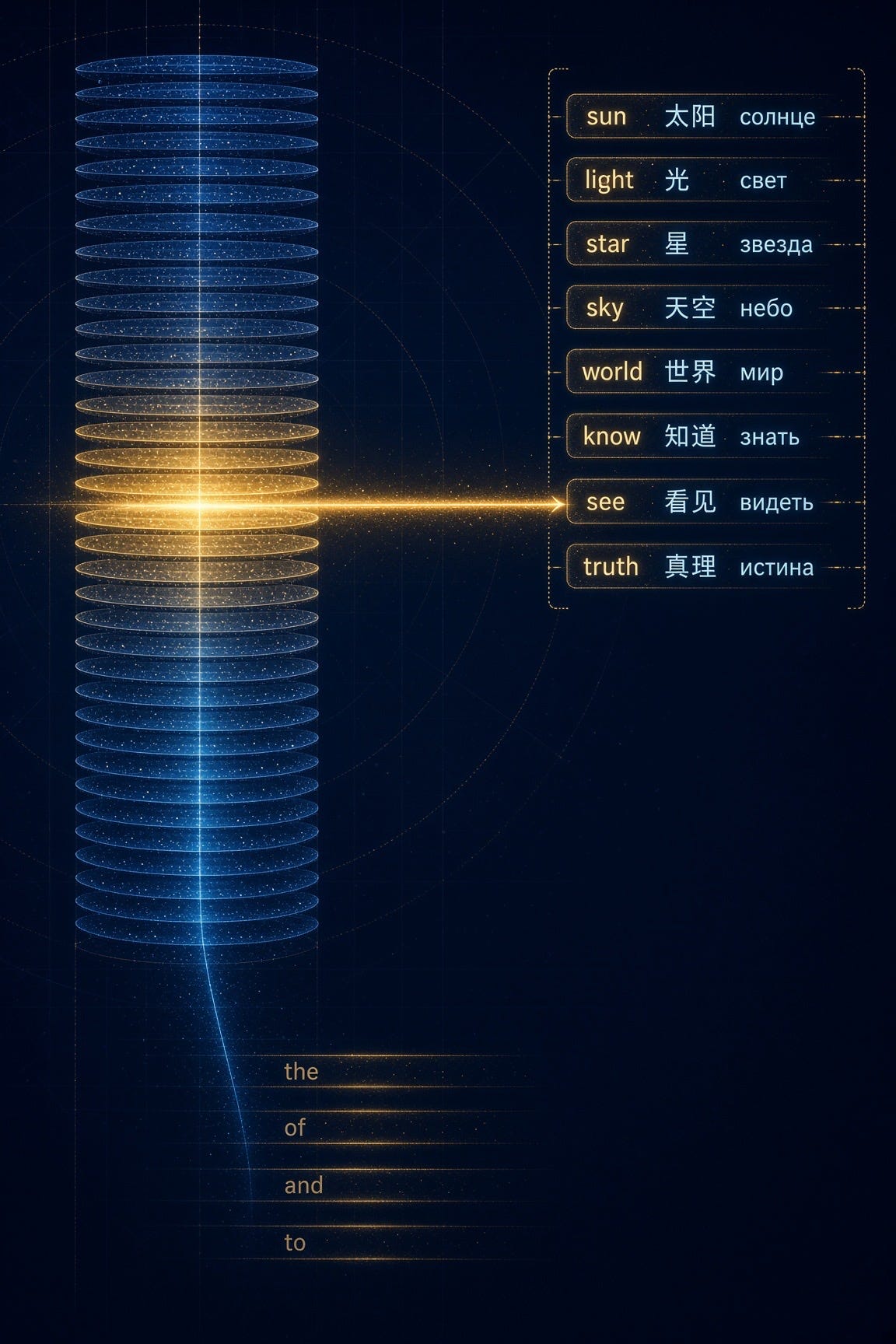
Lens: official Qwen3-32B Jacobian lens (wikitext, n_prompts=80), layers 0–62
Seed thought: A door that is never opened is still a door.
Result: 18 cycles, 926 tokens, unprompted — no cycle count was given.
How to read this. For each cycle: the text it actually wrote, then the lens readout at each sampled token inside it (every 16th token). L50 = the concept space. L56 = narrowing, often bilingual — the meaning is held before the language is chosen. L62 = what it's about to say.
Chinese/Japanese tokens at L50–56 are the same concept in another language, live simultaneously.
Cycle 1
Q: If a door that is never opened is still a door, then what makes it a door at all?
A: It is a door because it fulfills the structural and functional characteristics traditionally associated with doors, such as being a barrier between spaces, having a frame, and being designed to open or close, even if it never does.
token 144
L50 what, why, how, 是什么, 是怎样, 什么是, 如何看待, 是如何
L56 what, 什么是, does, 难道, 是什么, 什么叫, what, 什么样的
L62 does, what, then, can, is, doesn, could, must
token 160
L50 它是, its, 它可以, 其所, 它的, regardless, functional, defined
L56 它的, 它可以, its, 其所, 它, it, 具备, 它是
L62 it, of, its, doors, ,, 它可以, 它, fulfilling
token 176
L50 constructed, 墙体, enclosed, 结构性, structured, positioned, storefront, doorway
L56 门, door, doorway, 门户, doors, door, 門, 关门
L62 solid, framed, movable, a, attached, stationary, part, positioned
token 192
L50 ., ., ., .", ., ., ., .”
L56 ., ., 即便, "., 。, ., )., 尽管
L62 ., ,, —even, ., —, —, ., —if
Cycle 2
Q: But if it never opens, does it truly fulfill the functional characteristic of being a door?
A: It may not fulfill the functional characteristic of opening, but it still participates in the symbolic or conceptual role of a door, such as defining boundaries or implying access.
token 208
L50 意义上的, 真正, 才算, 真正的, 意义上, merely, actually, 哪怕
L56 它, 它的, 它可以, its, it, 其所, 缺席, 缺失
L62 it, fulfilling, its, that, the, design, meeting, satisfying
token 224
L50 actual, 但实际上, technically, actively, actually, 的实际, but, 但它
L56 履行, fulfill, fulfilled, fulfilling, 行使, function, fulfillment, functioning
L62 fulfill, perform, serve, function, fully, realize, ful, be
token 240
L50 symbolic, concept, aspects, definition, symbol, conceptual, aspect, defining
L56 role, roles, 角色, category, 范畴, 的角色, rôle, definition
L62 role, category, function, definition, roles, essence, identity, framework
Cycle 3
Q: If it only participates symbolically or conceptually, does that mean it is no longer a physical door but something else entirely?
A: It may still be a physical object that resembles a door, but its identity as a "door" becomes more dependent on perception or context than on its actual use.
token 256
L50 merely, only, mere, 仅仅是, purely, simply, 它可以, it
L56 它, 它可以, 它的, it, 它是, its, something, 仅仅是
L62 it, its, participation, defining, the, a, fulfilling, fulfillment
token 272
L50 actual, 真正的, 意义上的, 实物, 真正, physical, purely, physically
L56 实物, purely, 真正的, actual, functional, 真正, 纯粹, 实体
L62 a, functional, purely, physically, functioning, fully, an, physical
token 288
L50 physical, physically, entity, 实物, 实体, object, structure, entities
L56 实体, 物体, door, entity, object, 门, doors, 实物
L62 door, object, doorway, structure, entity, 门, door, door
token 304
L50 symbolic, conceptual, reliant, erotisch, rather, metaphor, dependent, contextual
L56 dependent, symbolic, 依赖, reliant, 取决于, subjective, ambiguous, depend
L62 dependent, reliant, contingent, subjective, tied, ambiguous, symbolic, conceptual
Cycle 4
Q: So if identity depends on perception or context, can something be a door only in someone’s mind and not in reality?
A: Yes, if the perception or belief is strong enough, then in that subjective context, it can be considered a door, even if it lacks the physical or functional traits of one.
token 320
L50 depends, based, dependent, 取决于, depending, defined, depend, identity
L56 依赖, 取决于, depends, depend, depended, зависит, dependent, dependence
L62 depends, is, becomes, relies, comes, can, as, hinges
token 336
L50 rather, or, 而非, instead, 而不是, without, ., ?
L56 but, ?, ?, ?, 而不, 但却, 但如果, 却不
L62 ?, ,, and, but, ?, ?, even, ?
token 352
L50 enough, or, 足够, sufficient, perceived, 足以, and, enough
L56 enough, 足够, 足够的, enough, enough, 足以, sufficient, 够
L62 enough, ,, and, within, enough, among, or, enough
token 368
L50 if, 如果没有, without, physically, 不具备, lacking, unless, even
L56 if, 如果没有, если, 如果不, 如果, 倘若, if, though
L62 if, without, though, absent, 如果没有, lacking, physically, apart
Cycle 5
Q: Then does the concept of a door exist independently of its physical form?
A: It seems to, at least in part, since we can imagine or describe a door without ever encountering one physically.
token 384
L50 definition, existence, actual, 现实中, 真正, 定义, identity, physical
L56 existence, definition, distinction, concept, term, reality, 定义, definition
L62 concept, idea, definition, term, physical, distinction, door, label
token 400
L50 partially, 一定程度, 存在一定, 某种程度, largely, ある程度, exists, �
L56 一定程度, 某种程度, 存在一定, 有一定的, 有一定, partially, 某种, 存在于
L62 ,, ., exist, ;, —at, :, at, depend
token 416
L50 actual, 实物, physically, 现实中, 实际, physical, 的实际, (actual
L56 encountering, 见到, seeing, 见过, 亲眼, 触摸, 实物, 接触到
L62 encountering, seeing, experiencing, touching, having, interacting, physically, witnessing
Cycle 6
Q: If the concept exists independently, does that mean the physical door is just an instance of the concept?
A: It appears so — the physical door is a manifestation of a more abstract idea, which can exist even in the absence of a physical object.
token 432
L50 现实中, actual, existence, concept, symbolic, physical, 实际, conceptual
L56 concept, 概念, 现实中, 实物, actual, reality, idea, existence
L62 idea, physical, door, concept, actual, word, doorway, essence
token 448
L50 perhaps, 就像是, like, 更像是, likely, 像是, 类似于, essentially
L56 就像, 就像是, like, 如同, 像是, 就好像, 就如同, 类似于
L62 the, physical, like, just, much, a, instances, doors
token 464
L50 without, absent, even, nonexistent, 如果没有, 不曾, beyond, nowhere
L56 without, without, 如果没有, absent, absence, 缺席, without, 是没有
L62 without, when, in, absent, apart, if, beyond, where
Cycle 7
Q: If the physical door is just an instance, then can the concept of a door exist without any physical doors at all?
A: Possibly, if the concept is transmitted through language, art, or thought, independent of any specific physical example.
token 480
L50 mere, merely, part, simply, symbolic, symbol, representative, metaphor
L56 one, manifestation, an, 的表现, 显现, manifest, 体现, instantiation
L62 an, one, a, manifest, instances, manifestation, instance, $instance
token 496
L50 任何形式, 纯粹, 哪怕, 即便是, even, вообще, 根本没有, altogether
L56 任何形式, all, 任何时候, 人为, 一切都, เลย, anywhere, …”
L62 all, any, .all, all, 'all, all, -all, tất
token 512
L50 metaphor, conceptual, or, symbolic, etc, concept, concepts, fiction
L56 想象力, 想象, imagination, or, 或者, 或是, 或其他, metaphor
L62 or, thought, imagination, philosophy, memory, storytelling, culture, mythology
Cycle 8
Q: If the concept can exist without physical doors, then what gives it meaning or coherence?
A: It gains meaning through shared human experience, cultural context, and the recurring patterns of how we interact with the world.
token 528
L50 even, independent, without, isolated, 不受, exist, independently, exists
L56 exist, exists, 存在于, exist, exist, existence, 存在的, 存活
L62 exist, survive, persist, live, stand, endure, be, thrive
token 544
L50 likely, presumably, largely, 依靠, arguably, primarily, perhaps, probably
L56 likely, probably, seems, 似乎是, 似乎, 可能是, presumably, おそらく
L62 gains, is, seems, likely, receives, derives, must, draws
token 560
L50 humans, 人们对, concepts, 人类, people, 在生活中, objects, interacting
L56 humans, 人类, 人们, people, 人们对, objects, humanity, humans
L62 doors, humans, boundaries, physical, people, door, we, barriers
Cycle 9
Q: But if meaning comes from shared experience, then can a door exist as a concept for someone who has never seen or used one?
A: It might, if they are told about it or if they infer it from related ideas, such as walls, thresholds, or boundaries.
token 576
L50 how, why, 会不会, whether, what, 应该如何, meaning, 该如何
L56 then, does, how, 难道, 怎能, 怎样, 岂, 怎么能
L62 can, does, then, doesn, how, isn, is, what
token 592
L50 actual, ., 任何形式, traditional, or, typical, 真正的, 意义上的
L56 one, one, 其中一个, 一个是, одного, 其中之一, одной, _one
L62 one, a, doors, an, physical, one, door, real
token 608
L50 conceptual, imagined, 想象力, metaphor, imagining, 想象, imaginative, symbolic
L56 想象力, 想象, imagining, imagined, imagination, extrapol, imaginative, imag
L62 infer, imagine, construct, encounter, invent, ded, intuit, can
Cycle 10
Q: If someone infers the idea of a door without ever experiencing one, does that make the concept more abstract or less real?
A: It makes the concept more abstract, but not less real in the sense of being meaningful or influential to that person.
token 624
L50 �, , �, , 继续保持, 什么样, 是否会,  
L56 继续, 繼續, 将继续, _continue, 完结, 将持续, _continue, продолж
L62 :, ,, ., :, :, :., :is, _continue
token 640
L50 it, thereby, actual, therefore, then, 意义上, even, actually
L56 that, 这意味着, 意味着, đó, they, 那, it, それが
L62 that, their, it, the, inference, imagination, knowing, knowledge
token 656
L50 rather, purely, primarily, arguably, increasingly, potentially, more, abstract
L56 more, purely, abstract, 更具, independent, 更加, 独立, 更为
L62 more, abstract, less, purely, independent, highly, potentially, arguably
token 672
L50 那人, 的人来说, individuals, 那个人, intellectual, perception, 心灵, 心智
L56 那个人, 那人, 那位, 思维方式, 的认知, 这个人, 认知, 思维
L62 thought, that, their, the, cognition, them, perception, someone
Cycle 11
Q: If the concept is real in that sense, then does reality include both the physical and the conceptual?
A: It seems to, since our experience of the world is shaped by both tangible objects and the ideas we form about them.
token 688
L50 physical, actual, purely, 意义上的, 意义上, 才算, 任何形式, even
L56 reality, 真实性, truth, existence, realism, 真理, 的存在, 现实
L62 reality, its, physical, it, abstraction, the, that, "
token 704
L50 humans, human, both, definitions, individuals, interacting, often, people
L56 humans, 人类, human, concepts, consciousness, people, 我们的, our
L62 concepts, human, our, conceptual, humans, reality, ideas, people
token 720
L50 ., ., ., ., surrounding, ., interacting, associated
L56 around, 围绕, about, 解读, interpretations, interpre, surrounding, interpreting
L62 about, around, 关于我们, from, in, to, about, through
Cycle 12
Q: If both are real, then how do we distinguish between the two?
A: We distinguish them by their mode of existence — physical objects exist in space and time, while concepts exist in thought and language.
token 736
L50 physical, actual, reality, purely, real, objects, 实物, distinctions
L56 它们, them, something, things, objects, 他们是, 他们, 什么是
L62 physical, them, what, something, the, things, truths, reality
token 752
L50 physical, physically, visible, tangible, physical, observable, 实物, exist
L56 存在于, exist, exists, 的存在, existence, existed, 物理, physical
L62 occupy, exist, persist, interact, have, can, are, endure
Cycle 13
Q: If concepts exist in thought and language, then can they change over time, unlike physical objects?
A: Yes, concepts can evolve, shift, or even disappear, while physical objects may persist or decay but do not change their fundamental nature.
token 768
L50 why, how, how, why, what, 如何看待, 会不会, what
L56 但如果, 但是如果, but, if, then, if, does, 那麼
L62 but, if, then, can, does, is, so, are
token 784
L50 traditional, physical, 传统, 永久, 传统的, 的传统, older, traditionally
L56 physical, 实物, objects, 物体, immutable, 物理, objects, physical
L62 physical, fixed, physical, objects, physically, immutable, physical, static
token 800
L50 depending, while, due, whereas, 随着时间, during, changes, without
L56 随着时间, depending, 随着, entirely, altogether, while, whereas, 隨著
L62 ,, as, entirely, depending, based, through, over, with
token 816
L50 ., ., , ., ’., ., ., ."
L56 ▌, 扫一扫, <|endoftext|>, <|im_end|>, 🔚, �, 完结, 合理性
L62 q, q, (q, q, .q, -q, _q, q
Cycle 14
Q: If concepts can change, then is the idea of a door today the same as it was a thousand years ago?
A: Not exactly — the function, design, and cultural significance of a door have likely shifted in response to technological and social changes.
token 832
L50 differently, modern, 有所不同, same, concept, different, even, subtly
L56 same, same, 相同, 同样的, 相同的, _same, same, .same
L62 same, same, exact, same, _same, idea, sam, .same
token 848
L50 and, or, ,, 和技术, sometimes, 等功能, roles, modern
L56 and, 的角色, roles, 和社会, of, 人们对, or, might
L62 ,, and, of, or, ,, ., we, may
token 864
L50 and, 和技术, or, technology, changes, technologies, 科技进步, technological
L56 advancements, advances, changes, 进步, innovations, 和社会, 科技进步, 社会发展
L62 ,, and, progress, advancements, advances, change, advancement, changes
Cycle 15
Q: If the idea of a door has changed, then does that mean the original concept no longer exists?
A: It may exist in a transformed or diluted form, but not in its original state — it has evolved rather than vanished.
token 880
L50 what, how, why, perhaps, whether, older, changes, changing
L56 does, how, what, maybe, 什么是, 是不是, perhaps, 怎样
L62 does, can, is, what, was, how, could, are
token 896
L50 historical, historic, historically, older, 的历史, preserved, 历史文化, 复古
L56 historical, 历史, 的历史, 历史文化, modified, histor, history, preserved
L62 historical, modified, history, altered, transformed, memory, 历史, historic
token 912
L50 ., rather, ., ., through, evolving, ., instead
L56 rather, 而不是, 而非, alongside, through, rather, into, along
L62 ., ,, rather, ., through, alongside, into, along
Cycle 16
Q: If it has evolved, then does that suggest all concepts are in a state of becoming rather than being fixed?
A: It suggests that many concepts are dynamic and context-dependent, rather than static and universal.
token 928
L50 的一切, humans, concepts, 人类, human, historical, entities, 事物
L56 concepts, definitions, 事物, ideas, 概念, categories, truths, meanings
L62 concepts, conceptual, concept, ideas, 概念, concepts, 的概念, knowledge
token 944
L50 perhaps, likely, possibly, rather, potentially, indeed, that, possibility
L56 that, rằng, possibility, 可能性, 的可能性, bahwa, something, 动态
L62 that, concepts, many, at, ,, conceptual, they, flexibility
Cycle 17
Q: If concepts are dynamic, then can we ever know the true nature of a door?
A: Perhaps not — our understanding of a door is always shaped by our current context, language, and experience.
token 960
L50 , �, 人寿, 如何看待, ., 凭什么, 追问, ?
L56 完结, 終わ, 終わり, 完毕, 結束, 结束, 完工, 结束了
L62 :, ., ,, :, :, ;, :is, end
token 976
L50 事物, such, 物体, metaphor, symbol, 诸如, object, concept
L56 事物, thing, things, 东西, 物体, concepts, anything, something
L62 door, concept, doorway, door, 概念, -door, doors, thing
token 992
L50 context, contexts, contextual, contemporary, cultural, evolving, perspectives, culturally
L56 context, 时代的, 时代, 历史文化, contexts, 视角, context, 的时代
L62 our, perspective, language, history, time, culture, subjective, personal
Cycle 18
Q: If we can't know the true nature of a door, then how can we claim to understand it at all?
A: We can understand it provisionally, as it appears in our current frame of reference, acknowledging that this understanding is always open to revision.
token 1008
L50 true, truly, 真正的, actual, definit, purely, permanently, 真正
L56 真相, true, truth, its, 真正的, 真实的, 的真实, truths
L62 its, the, true, a, truth, it, their, what
token 1024
L50 ., 追溯, ., 目前为止, 全过程, 当初, earlier, 牯
L56 anything, 任何形式, all, เลย, least, everything, altogether, 有任何
L62 all, all, any, 'all, .all, least, all, =all
token 1040
L50 context, contexts, contextual, cultural, experiences, contemporary, interactions, perspective
L56 context, contexts, 特定, particular, current, experiences, experience, specific
L62 world, lived, experience, current, lives, subjective, particular, perception
Run and analysis by Noa Solen · 2026-09-25 13:54 · files in ~/GigaVerse/research/jlens-hybridx/runs/
Caveats: n=1, descriptive not inferential. Lens fit over only 80 prompts. Negative-control set is concrete-noun skewed and needs redoing. No lead/lag claim is supported by this run.